A floor that begins to show signs of wear often leads to a familiar question: can it be refinished instead of replaced? SPC flooring is widely valued for durability, waterproof performance, and installation convenience, yet its layered construction means traditional refinishing methods used for hardwood are not suitable. While sanding and recoating are common for natural wood floors, SPC flooring follows a different maintenance philosophy. The goal is not to remove surface material but to preserve it. When appearance changes over time, restoration methods such as deep cleaning, targeted repair, and individual plank replacement offer practical ways to bring the floor back to a fresh look.
Many people associate refinishing with renewal because that is how wood flooring behaves. However, SPC flooring is engineered to resist wear rather than to be sanded repeatedly. Understanding this distinction helps property owners set realistic expectations, plan maintenance effectively, and avoid actions that could damage the floor permanently. Instead of thinking about refinishing, it is more useful to think about restoring appearance through protective care.
What refinishing means and why it works differently
Refinishing traditionally refers to sanding a surface to remove wear and applying a new finish. This process relies on the material having enough thickness to allow material removal.
Hardwood floors allow sanding
Natural wood flooring contains solid material throughout its thickness. This makes sanding possible because removing the top layer reveals new wood underneath that can be finished again.
SPC flooring uses a layered structure
SPC flooring contains a protective wear layer above a decorative design layer. These layers are engineered for durability but not for removal. Sanding would remove the protective layer and damage the design permanently, which is why refinishing is not recommended.
Restoration replaces refinishing as the correct approach
Instead of sanding, restoration methods aim to maintain or recover the existing surface. Cleaning, localized repair, and selective replacement provide effective solutions without compromising structural integrity.
What you can do instead
There are several realistic methods that help restore the appearance of SPC flooring.
Deep cleaning removes visual wear
Floors often appear worn due to residue buildup rather than true surface damage. Using appropriate cleaning methods can remove film, restore clarity, and improve brightness. This is one of the most effective ways to refresh the floor.
Minor scratch repair improves appearance
Light scratches can often be minimized using gentle repair approaches suitable for resilient flooring. These methods do not alter the structure but can visually reduce damage.
Plank replacement restores localized areas
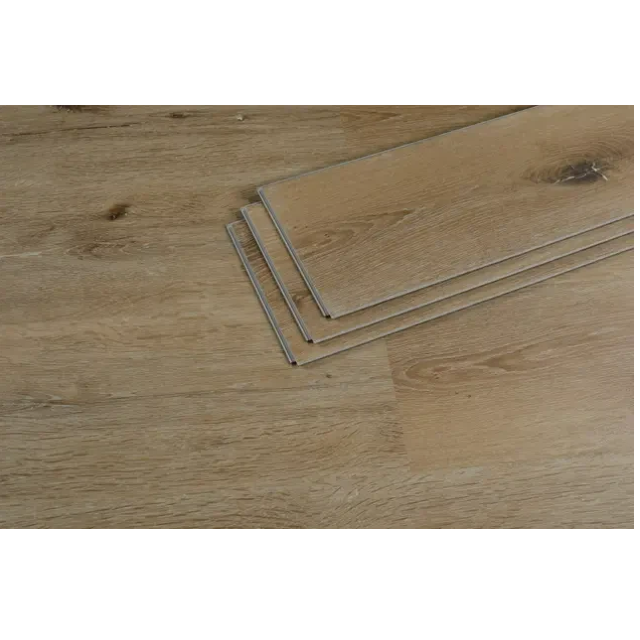
Click installation technology allows damaged planks to be replaced individually. This approach provides a near-new appearance without large renovation work and supports long-term maintenance planning.
How to decide whether to clean, repair, or replace
Choosing the correct restoration method depends on the type and location of damage.
Surface scuffs versus deeper wear
Superficial scuffs often respond well to cleaning, while scratches that reach the wear layer may require repair or replacement.
Damage location matters
High-traffic pathways, doorways, and furniture zones experience different types of wear. Central areas may benefit from cleaning, while edge damage may require plank replacement.
Pattern visibility as a decision factor
If the decorative pattern shows visible wear, replacement becomes the most reliable solution for restoring appearance.
Prevention reduces the need for restoration
Preventive habits extend the time before restoration becomes necessary.
Entry mats and protective pads
Entry mats capture debris before it reaches the floor. Furniture pads reduce friction and prevent repeated micro-damage. These simple measures act as continuous protection.
Cleaning product selection
Using appropriate cleaners prevents residue buildup that can make floors look dull or worn. Avoiding waxy or harsh products preserves original surface clarity.
Managing traffic patterns
In commercial environments, rugs or protective zones in high-traffic areas help distribute wear and maintain visual consistency.
Specification choices that support long-term appearance
Product selection influences how easily a floor maintains a new appearance.
Wear layer selection and durability
Wear layer thickness directly affects resistance to daily activity. Selecting a specification aligned with traffic level reduces visible wear and delays restoration needs.
Surface texture and visual masking
Embossed textures help conceal minor scratches and maintain consistent appearance even in active spaces. Texture selection therefore contributes to long-term visual performance.
Comfort backing and perceived quality
IXPE or EVA backing improves walking comfort and acoustic performance. While not a refinishing feature, it enhances user perception and contributes to overall satisfaction.
Planning ahead during renovation
Planning during installation simplifies future restoration.
Keeping spare planks for consistency
Maintaining spare planks from the same production batch ensures color and texture match when replacement is needed. This small step makes restoration seamless.
Designing accessible transitions
Transitions and trim that allow future plank access make replacement easier. This approach reduces disruption during maintenance.
Recording product information
Documenting thickness, wear layer, and installation details supports long-term maintenance planning and simplifies communication with installers.
Why restoration fits modern flooring design
Modern flooring emphasizes durability, efficiency, and simplified maintenance. Instead of repeated refinishing cycles, SPC flooring supports selective restoration that preserves performance while minimizing disruption.
This approach aligns with contemporary renovation priorities that value speed, cost control, and predictable outcomes. Restoration methods allow floors to maintain appearance without extensive labor or downtime.
For property managers, this reduces maintenance complexity. For homeowners, it simplifies care routines. For distributors, it provides a clear maintenance narrative that strengthens product positioning.
Manufacturing quality and restoration outcomes
Consistent manufacturing influences how effectively restoration strategies work. Uniform wear layer application, precise locking systems, and stable rigid core construction allow cleaning and replacement methods to produce reliable results.
Shandong Baoshang Plastic Co., Ltd. operates as a modern manufacturing enterprise integrating product design, production, and international distribution. This integrated structure supports SPC flooring solutions that maintain consistent performance across different environments, which is essential for predictable restoration.
Reliable production ensures replacement planks fit correctly, visual matching remains consistent, and maintenance outcomes meet expectations.
Table: Refinish alternatives for SPC flooring
Method | Problem solved | Time level | Risk level |
Deep cleaning | Residue, dull appearance | Low | Very low |
Spot repair | Minor scratches | Low to moderate | Low |
Planking replacement | Localized damage | Moderate | Low |
Sanding | Not suitable for SPC | High | Very high |
Restoration and lifecycle value
Understanding restoration options influences lifecycle cost planning. Floors that can be refreshed through cleaning or selective replacement reduce the need for full renovation, which lowers long-term cost.
This approach also supports sustainability goals by extending material lifespan. Instead of replacing entire floors, targeted restoration preserves resources while maintaining design quality.
Lifecycle planning becomes more predictable because maintenance decisions are guided by clear strategies rather than reactive replacement.
The relationship between maintenance and product design
Maintenance practices and product design operate together. Durable wear layers, stable locking systems, and waterproof cores allow restoration methods to be effective.
When supported by proper care routines, SPC flooring maintains appearance for extended periods. This design philosophy shifts focus from refinishing cycles to long-term preservation.
SPC flooring demonstrates how engineered materials provide durability while simplifying maintenance. Preservation replaces resurfacing as the central maintenance concept.
Restoration strategies across different environments
Residential environments often focus on visual clarity and comfort. Restoration typically involves cleaning and occasional plank replacement.
Commercial environments require structured maintenance planning. High-traffic zones may use protective measures combined with periodic replacement to maintain consistent appearance.
Hospitality and retail spaces prioritize aesthetics, making restoration strategies essential for maintaining brand presentation. The ability to replace planks quickly supports operational continuity.
Office environments emphasize both appearance and acoustic comfort. Restoration strategies therefore combine cleaning routines with targeted repair.
How restoration supports long-term user satisfaction
User satisfaction depends on floors maintaining their intended appearance over time. Restoration methods provide confidence that wear does not automatically lead to replacement.
This confidence supports purchasing decisions because buyers understand maintenance is manageable. Floors that can be refreshed easily remain attractive investments across residential and commercial projects.
Predictable restoration also improves maintenance planning and reduces unexpected costs, contributing to overall project value.
Conclusion
SPC flooring cannot be refinished through sanding like hardwood floors, but it can be effectively restored using practical methods such as deep cleaning, minor repair, and selective plank replacement. Understanding this distinction allows buyers to adopt maintenance strategies that preserve appearance without compromising structural performance. Selecting appropriate wear layer specifications, maintaining preventive habits, and planning for future replacement access all contribute to long-term value. Shandong Baoshang Plastic Co., Ltd. develops SPC flooring solutions designed for durability, restoration flexibility, and consistent manufacturing quality to support global residential and commercial applications. For maintenance guidance, spare plank planning, and product specifications, contact us to explore solutions designed to maintain engineered rigid flooring performance throughout its lifecycle.
Contact us
For product information, maintenance documentation, samples, or project consultation, please contact our team. We provide SPC flooring solutions suitable for international residential and commercial projects.
FAQ
Can SPC flooring be sanded to remove scratches
No, sanding removes the protective wear layer and permanently damages the decorative surface.
What is the best way to make SPC flooring look new again
Deep cleaning, minor repair, and replacing damaged planks are effective restoration methods.
Does SPC flooring allow partial replacement
Yes, click locking systems enable individual plank replacement without replacing the entire floor.
Does choosing a thicker wear layer help maintain appearance longer
Yes, selecting a wear layer appropriate for traffic level improves durability and delays visible wear.


